
How to Exchange USDT ERC-20: Ethereum Fees and Address Verification
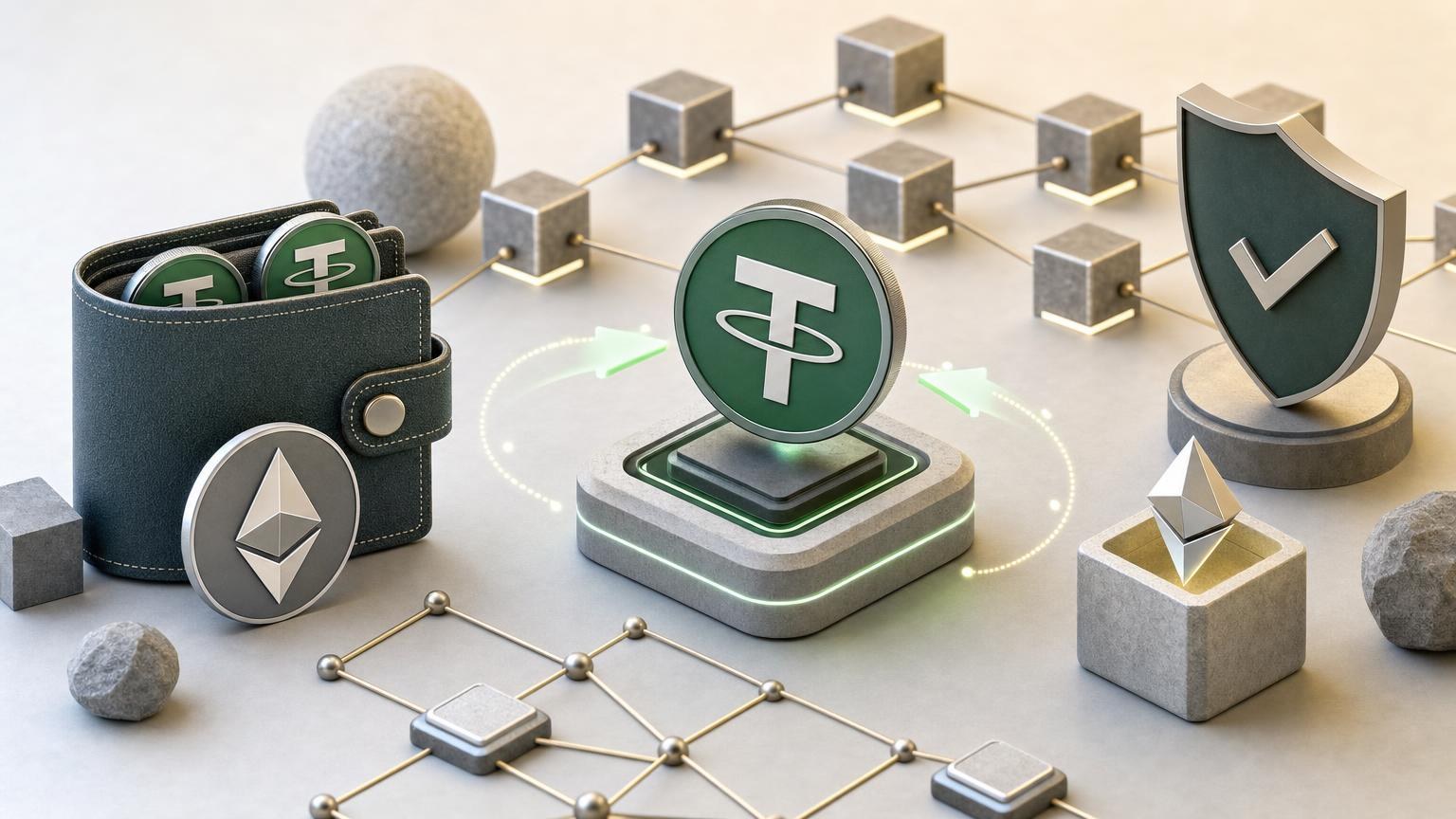
To exchange USDT ERC-20 safely, verify two separate things before sending: the receiving platform must support USDT on the Ethereum network, and the deposit address must match the address shown in your order. The transfer itself is an Ethereum smart-contract transaction, so its network fee is paid in ETH rather than USDT.
Main Takeaways
- ERC-20 identifies the network route. Both the sending wallet and the receiving service must use Ethereum for this transaction.
- Ethereum gas and the exchange rate are different costs. Gas pays for blockchain execution; the service may separately quote an exchange fee or include its costs in the displayed rate.
- The sender normally needs ETH. Holding enough USDT without enough ETH may prevent a self-custody wallet from broadcasting the token transfer.
- An address that looks valid is not necessarily the correct deposit address. Check the network label, the full address, the active order, and any service instructions.
- A transaction hash provides evidence of an onchain transfer, not automatic proof that an exchange order has been credited or completed.
The Minimum Concepts You Need
USDT ERC-20
USDT exists on multiple blockchains. “USDT ERC-20” means USDT issued and transferred through Ethereum. Tether’s documentation identifies USD₮ on Ethereum as an ERC-20 token and warns users to confirm the correct transport protocol when sending between addresses. [1]
This distinction matters because the ticker “USDT” alone does not define the route. A deposit page labeled Ethereum or ERC-20 must not be treated as interchangeable with a USDT address supplied for another network, even if a wallet interface displays the same asset name.
Gas
Gas measures the computational work required to execute an Ethereum transaction. The fee is based on the gas consumed and the price paid per unit of gas, with the applicable pricing influenced by Ethereum network demand. Ethereum gas is paid in ETH. [2]
An ERC-20 transfer interacts with a token smart contract, rather than performing only a basic ETH payment. Your wallet estimates the required gas before asking you to sign. That estimate can change, so a quotation seen earlier should not be treated as a permanent or universal USDT transfer fee.
Deposit Address and Token Contract
The deposit address identifies where the receiving service expects your funds for a particular order. The USDT token contract defines the token on Ethereum. These addresses serve different purposes: unless the service explicitly instructs otherwise, you send through your wallet to the deposit address, not manually to the token contract.
Because an ERC-20 transfer calls a smart contract, an explorer may show the USDT contract as the transaction’s direct interaction target while listing the final recipient inside the token-transfer details. Review the “tokens transferred” information rather than relying on a single “To” field. Ethereum explorers expose the sender, interaction target, token transfers, status, gas used, and transaction fee. [3]
Mechanism Map: From Exchange Order to Verifiable Result
- User action: Select USDT and choose ERC-20 or Ethereum as the sending or deposit network. Service or wallet mechanism: The interface generates or displays an order-specific receiving address and applicable conditions. Network mechanism: No blockchain transfer has occurred yet. What to verify: Confirm that the requested direction and Ethereum network are currently available before creating or funding the order.
- User action: Copy the deposit address into the sending wallet. Service or wallet mechanism: The wallet prepares a call to the USDT contract with the recipient and token amount encoded in the transaction data. Network mechanism: The transaction remains unsigned and unbroadcast. What to verify: Compare the first and last characters—and preferably the entire address—against the active order. Avoid typing an Ethereum address manually. [4]
- User action: Review the wallet confirmation. Service or wallet mechanism: The wallet estimates gas and checks whether the account can cover the transfer. Network mechanism: The eventual fee will be charged in ETH if the transaction is executed. What to verify: Check the Ethereum network, USDT amount, recipient, estimated fee, and available ETH balance.
- User action: Sign and broadcast. Service or wallet mechanism: The wallet creates a transaction hash and sends the signed instruction to Ethereum nodes. Network mechanism: The transaction enters the pending pool until a validator includes it in a block. What to verify: Open the transaction hash in an Ethereum block explorer and check whether its status is pending, successful, or failed. [3]
- User action: Wait for the receiving service to detect the transfer. Service or wallet mechanism: The service matches the deposit address, token, amount, and required blockchain confirmation state to the order, then applies any relevant compliance checks. Network mechanism: Additional blocks increase confidence that the recorded transfer will remain final. What to verify: A successful USDT token transfer must show the expected recipient and amount; order crediting remains a separate service-level status.
A Realistic Exchange Scenario
Suppose a user has USDT ERC-20 in a self-custody wallet and creates an exchange order that provides an Ethereum deposit address. Before sending, the user confirms that the order explicitly names USDT on Ethereum, pastes the address, compares it with the order, and checks that the wallet has enough ETH for gas.
The wallet then displays an estimated fee. That fee is not taken from the nominal USDT amount by the Ethereum protocol; it is paid from the wallet’s ETH balance. After signing, the user receives a transaction hash. The explorer may show an interaction with the USDT contract, while the token-transfer section identifies the exchange deposit address as the USDT recipient.
If the explorer reports success but the order remains uncredited, the useful evidence is the transaction hash, correct token contract, recipient address, transferred amount, network, and confirmation state. This is more informative than a wallet screenshot alone. The service may still need to match the deposit or complete direction-specific compliance procedures.
Where This Model Applies—and Where Conditions Change
This mechanism describes an onchain USDT transfer from an Ethereum wallet to a receiving address. It does not fully describe an internal transfer between accounts on one custodial platform, where no public Ethereum transaction may be created.
The party paying or displaying the network cost can also change. When you send from a self-custody wallet, your wallet normally requires ETH for gas. When a custodial platform sends a withdrawal, it may quote its own withdrawal charge or apply another fee policy. That quoted charge should not automatically be interpreted as the exact gas paid onchain.
Likewise, a successful blockchain transaction does not reveal the exchange rate, service fee, order limits, final payout, or compliance decision. Those are service-level conditions and must be reviewed before the order is funded. Verification requirements may vary by exchange direction and compliance results, while legal and tax treatment differs between countries.
Failure Points and Their Observable Signs
Wrong Network
Sign: The receiving page says Ethereum or ERC-20, but the withdrawal screen names another network. Stop before confirmation. Similar-looking address formats do not prove that the routes are compatible.
Insufficient ETH
Sign: The wallet shows USDT but disables confirmation, reports insufficient funds for gas, or cannot estimate the transaction. Adding more USDT does not solve an ETH gas shortage.
Changed or Malicious Address
Sign: The pasted address differs from the active order, changes after copying, or was supplied through an unsolicited message. Return to the official order interface and compare the entire value. Clipboard-replacement malware and phishing pages can substitute an attacker’s address.
Pending Transaction
Sign: A transaction hash exists, but the explorer reports “pending” and no block number is assigned. A fee set below current network requirements can delay inclusion. Do not create a duplicate transfer unless you understand how the wallet handles the account nonce and pending transaction. [5]
Failed Transaction
Sign: The explorer reports failure and no successful USDT token transfer appears. Some execution failures still consume gas because validators performed computational work, although the intended state change was reverted. [2]
Successful Transfer, Uncredited Order
Sign: The explorer shows success and the correct token recipient, but the service has not updated the order. Possible service-level causes include insufficient confirmation progress, an expired or unmatched order, an amount that conflicts with its terms, or a pending compliance review. These possibilities cannot be diagnosed from the transaction status alone; provide the transaction hash to support rather than sending again.
Transfer to the Wrong Address
Sign: The explorer confirms a different recipient from the order. Ethereum transactions are irreversible at the protocol level. If the recipient belongs to an identifiable service, its support team may be able to investigate, but recovery is not guaranteed. [5]
What You Can Now Explain and Check
- Explain why USDT ERC-20 requires Ethereum support at both ends of an exchange.
- Distinguish the Ethereum gas fee from an exchange rate, service fee, or withdrawal charge.
- Identify why a wallet may need ETH even when the transferred asset is USDT.
- Separate a deposit address from the official USDT token contract.
- Read the transaction status, sender, token recipient, amount, and fee in an Ethereum explorer.
- Recognize that onchain success and service-side crediting are related but separate events.
- Collect the transaction hash and other verifiable details before contacting support.
Once the network, address, fee source, and current order conditions are clear, the practical next step is to check the availability of a USDT ERC-20 exchange before transferring funds.

You may also like

Online Learning Glossary

Tips to Succeed in an Online Course